This is The Darkroom. One idea separates film grain that reads as real from grain that reads as a filter, and it is not the amount or the size. It is that real grain reacts to exposure. It is not a texture. It is a record.
What grain actually is
Film is an emulsion of light-sensitive silver-halide crystals. Where light strikes, those crystals develop into clumps of metallic silver (in color film, into dye clouds). More light means more crystals develop, in larger clumps. Less light means fewer, finer ones.
So grain is not decoration sprinkled over the picture. It is the physical structure of the exposure itself. Every grain clump is a place where photons hit and silver formed. The image and its grain are the same material.
Why that makes it density-reactive
Because grain is exposure, it changes across the frame:
- In the bright, heavily exposed areas, grain clumps and blooms. Highlights on film often look slightly dirty up close, not glassy clean.
- In the midtones, it settles into the even, pleasant texture most people picture when they think of grain.
- In the deep shadows, where little light landed, grain breaks up and gets restless rather than disappearing into smooth black.
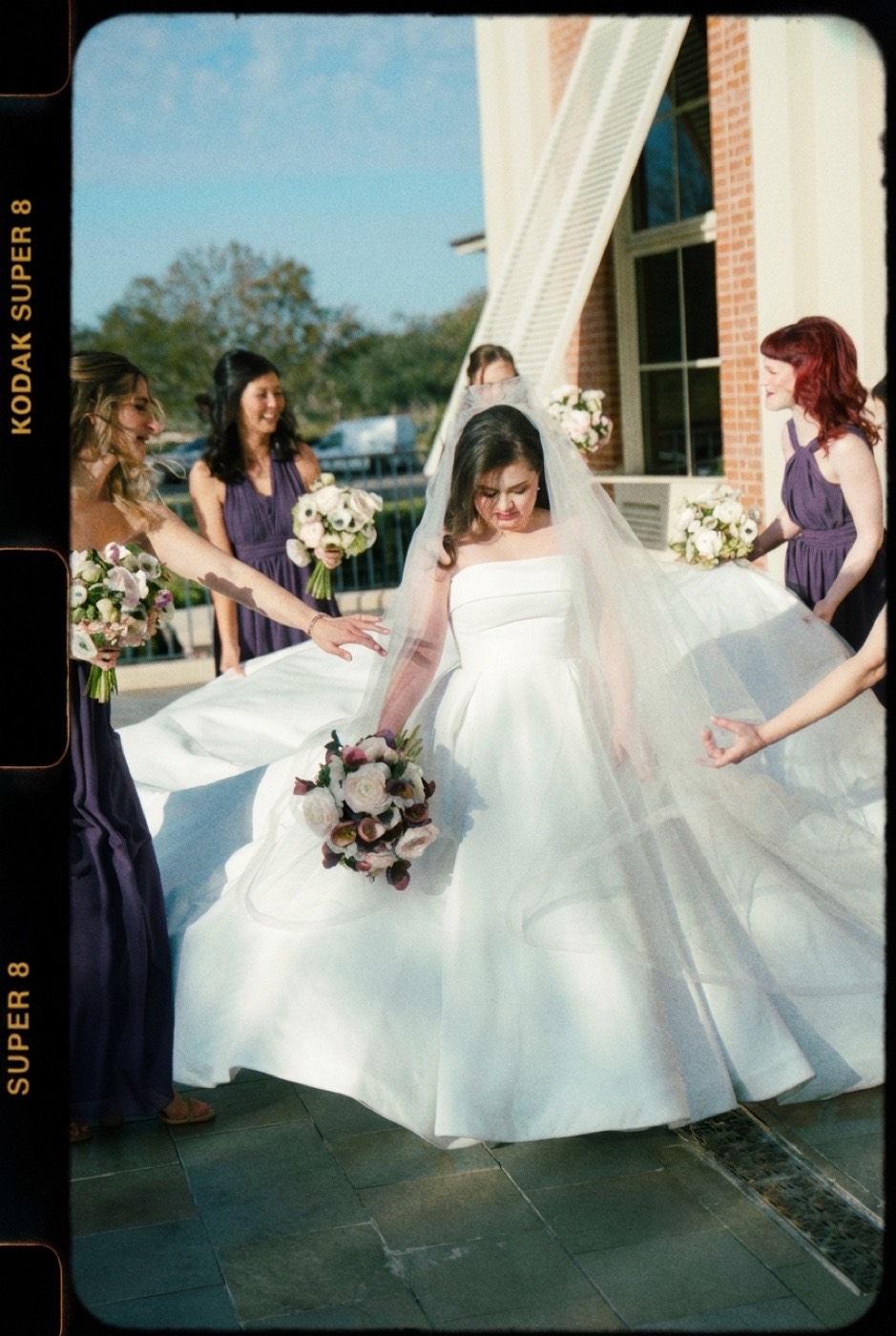
It also breaks form rather than decorating it. On a small format like Super 8, the grain clusters are large enough to compete with the subject, so fine detail dissolves into the grain instead of sitting cleanly on top of it. (That is also why Super 8 softness is under-resolution, not blur.)
Why fake grain looks fake
Now the practical part. Most digital "film grain" is a single uniform noise layer multiplied over the whole image at one constant strength. Sometimes it scales a little with ISO. Often it is just Perlin noise.
That is the tell. Real grain is never even. A flat, uniform grain layer sits on top of the photo like a screen, identical in the blown highlight and the black shadow, which never happens on film. The eye does not always know why it looks pasted on, but it reads as pasted on. The fix is not more grain or finer grain. It is grain that responds to the tones underneath it: heavier where the frame was overexposed, quieter in the mids, broken in the lows.
What this means for matching a look
If you want grain that reads as film, you cannot stamp it on at the end. It has to be reconstructed as part of the image, keyed to the exposure in each region. That is the difference between a grain overlay and a film look.
It is also one of the things Department of Vibe rebuilds rather than overlays: when you match a stock, the grain comes back density-reactive, blooming where the light overloaded the frame, the way the silver actually behaved. For the forensic side, how grain density helps you name a stock, see how to read a film stock.